Commercial kitchen pest control addresses the intensive moisture, residual fats, and heat produced in high-volume food preparation areas. Subtropical conditions in coastal Pinellas County drive pests like German…
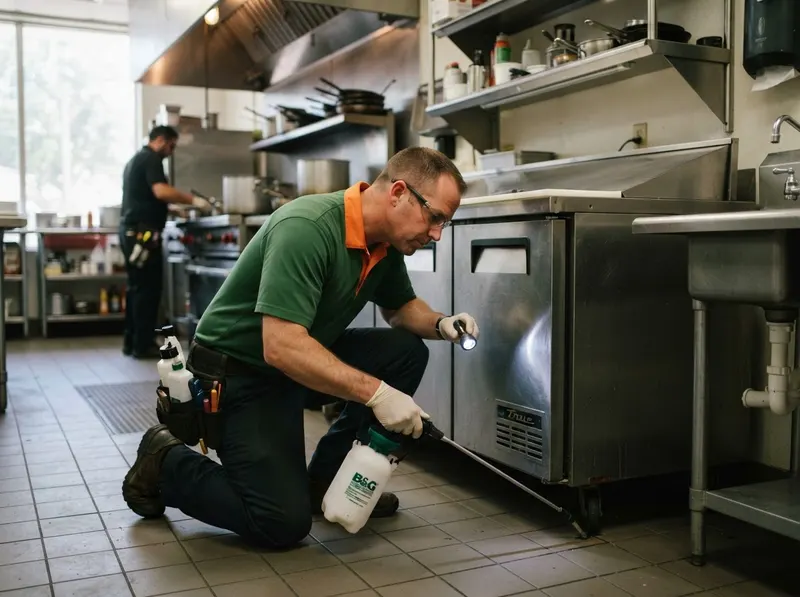
Commercial kitchen pest control addresses the intensive moisture, residual fats, and heat produced in high-volume food preparation areas. Subtropical conditions in coastal Pinellas County drive pests like German cockroaches (*Blattella germanica*) and drain flies into food service structures year-round. Treatments rely on an integrated pest management (IPM) methodology that eliminates pests while preserving ambient air quality and protecting food prep stations. Technicians target hidden structural voids beneath stainless steel prep tables, behind compressor motor housings, and inside floor drains. Biological enzyme foams break down organic grease layers where flies breed, while target-specific gel baits eliminate roach harborages without aerosolizing broad-spectrum neurotoxins near operational prep lines.
Facilities operating in historic retail strips like Kenwood and the 600 Block of Central Avenue encounter unique architectural challenges, such as aging plumbing penetrations and shared structural walls that facilitate pest migration. Waterfront restaurants near Bayway Isles, Snell Isle, and Coquina Key experience heightened subterranean rodent pressures due to nearby coastal seawalls and high water tables. For independent kitchens in Old Northeast and Euclid-St. Paul's, structural pest exclusion seals gaps exceeding 0.25 inches around walk-in refrigeration units and exterior delivery bays. Routine treatments use low-odor formulations that dry cleanly without leaving greasy residues, maintaining full compliance with the Florida Department of Agriculture and Consumer Services (FDACS) and local health department inspection protocols.
Selecting a commercial pest management schedule requires balancing kitchen volume against pest reproduction cycles. Small cafes in Crescent Lake or Disston Heights often maintain compliance with monthly service cycles focused on drain sanitization and perimeter monitoring. High-volume seafood houses and bakeries along 4th Street North require bi-weekly service during peak summer humidity when German cockroach eggs hatch in 28 days. Every treatment includes digital documentation specifying active ingredient common names, EPA registration numbers, targeted harborage points, and sanitation action items required by county health inspectors.
Every job gets a firm, written price after a free on-site visit.
Tell us about your commercial kitchen pest control job in St. Petersburg and we'll send a clear, written quote, usually the same day.
 Pelican Grove Pest Control