Securing a dependable pest control service in St. Petersburg shields residential properties from the persistent, moisture-driven biological pressure native to Pinellas County.
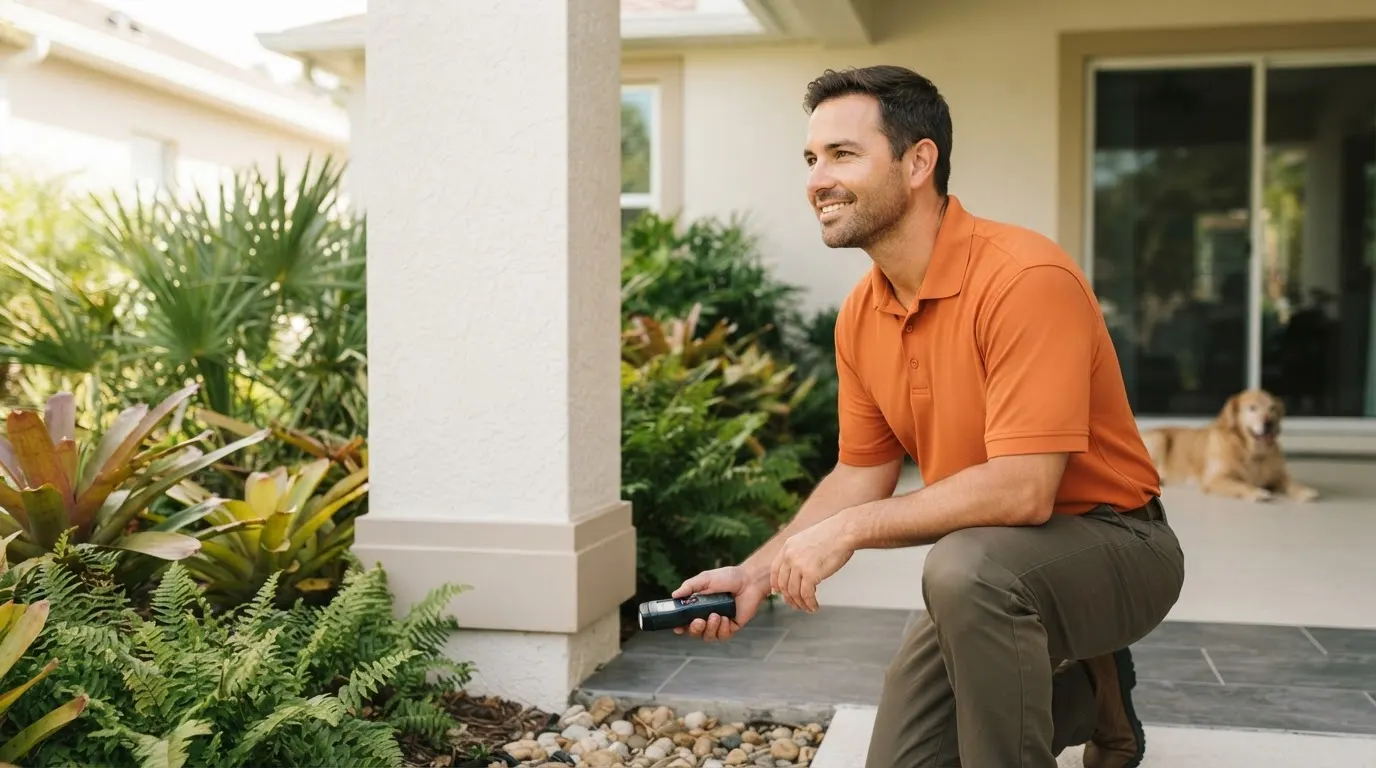
Pest Control Service in St. Petersburg is a targeted, botanical-forward structural treatment and perimeter defense protocol designed to eliminate sub-tropical insect and rodent infestations without compromising household safety or coastal waterways.
Every service reflects the same meticulous attention to detail, whether it's a single job or a larger pest control service project across St. Petersburg.
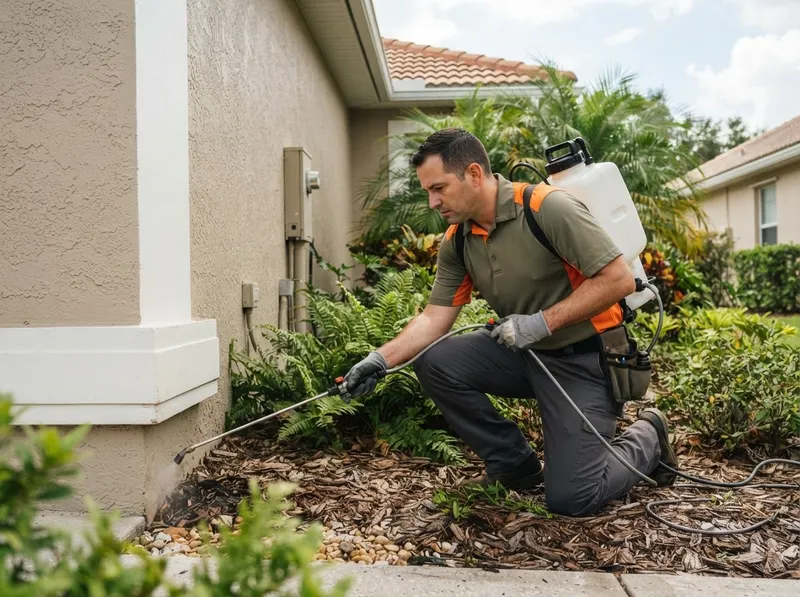
This protocol establishes a continuous, resilient chemical and physical shield around the immediate exterior building perimeter. Technicians apply a specialized, water-insoluble micro-encapsulated formulation that bonds directly to damp concrete foundations, brick skirtings, and rough stucco up to three feet above the soil line and five feet out over horizontal surfaces. The treatment actively targets migration corridors around exterior hose bibs, air conditioning line sets, threshold seals, weep holes, and window sills. Designed specifically to withstand the brutal ultraviolet degradation and daily 3-inch deluge cycles typical of Pinellas County summers, this preventative perimeter prevents American cockroaches, silverfish, earwigs, and invasive millipedes from crossing exterior boundaries into ground-floor living spaces.
Get a quote →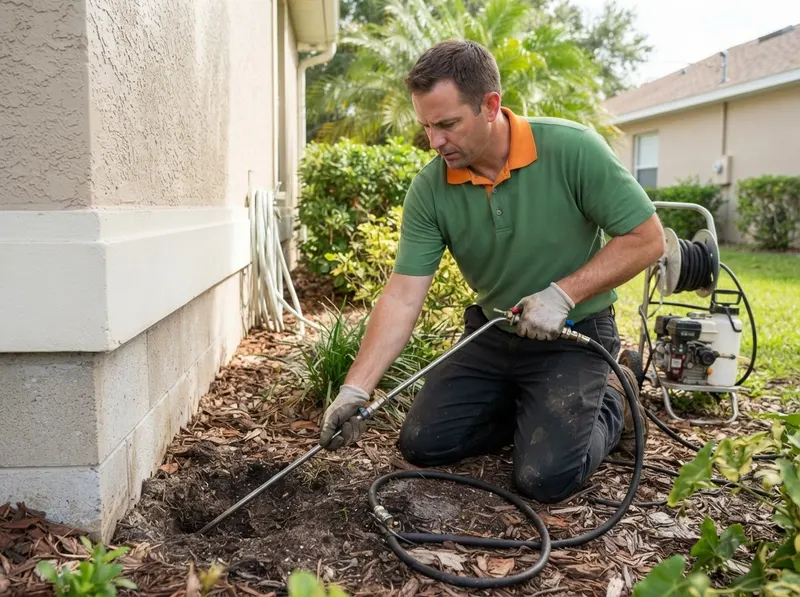
Engineered to combat native subterranean termites (Reticulitermes flavipes) and destructive Formosan subterranean termites (Coptotermes formosanus), this service establishes an unbroken non-repellent liquid barrier around structural footings. Technicians excavate continuous trenches measuring 6 inches wide by 6 inches deep immediately adjacent to exterior foundation walls, treating the backfill soil with exact-ratio termiticide solutions at four gallons per ten linear feet. Where concrete patios, brick paver driveways, or attached carports abut the foundation, precision rotary hammer drills bore half-inch holes at 12-inch intervals to inject the protective termiticide directly into the underlying substrate. Worker termites unknowingly track the non-repellent chemical throughout their deep soil foraging galleries, transferring the active ingredient back to the reproductive queen via physical grooming to collapse the entire colony within 60 to 90 days.
Get a quote →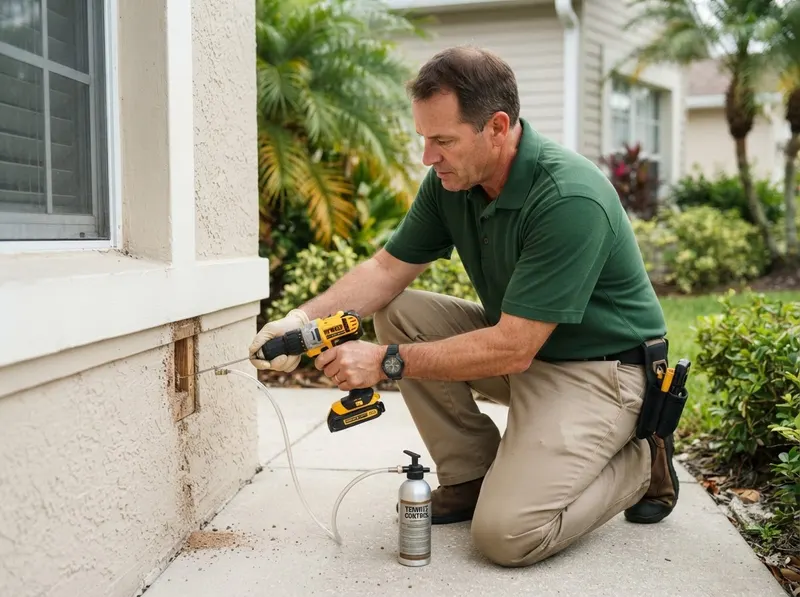
Designed specifically for localized infestations of Cryptotermes brevis that establish colonies directly within dry architectural framing, historic heart pine timbers, rafters, and cabinetry. Using acoustic listening devices, fiber-optic borescopes, and precision moisture sensors, technicians pinpoint the precise spatial boundaries of the active termite kick-hole galleries inside the timber. The service utilizes specialized micro-drilling techniques to insert directional brass injection tips through 1/8-inch apertures directly into the structural voids. High-pressure expandable borate foam and desiccating pyrethroid formulations are injected to coat the entire internal wood surface, killing active nymphs and soldier castes on contact and leaving a durable mineral salt barrier that permanently inhibits future wood digestion without requiring structural tent fumigation or family relocation.
Get a quote →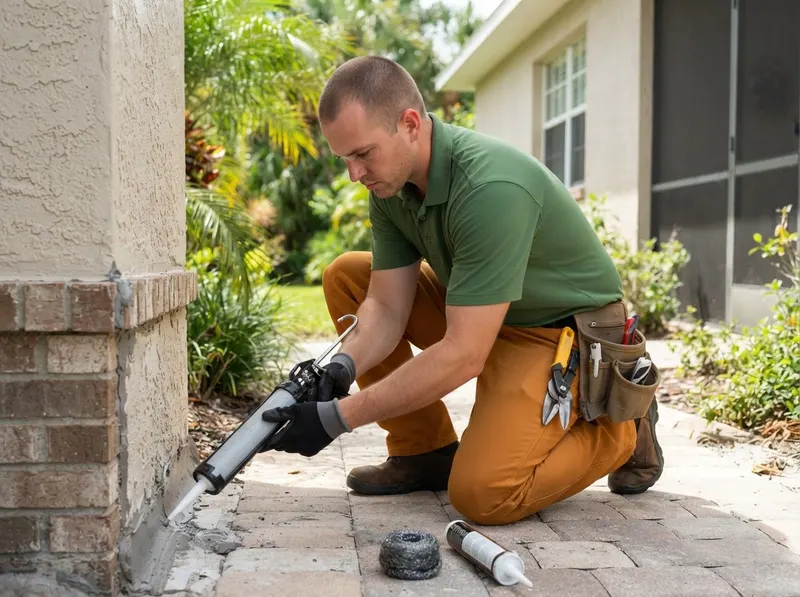
A permanent, engineering-focused structural solution developed to halt roof rat (Rattus rattus) infestations common in coastal neighborhoods filled with dense palm canopies and fruit trees. Technicians conduct an exhaustive 360-degree inspection across the building envelope, locating all unsealed entry points larger than a quarter-inch from the ground level to the roof ridge. Technicians install galvanized 19-gauge steel hardware cloth, copper wire packing mesh, metal roof flashing, and high-density polyurethane expanding foam laced with bittering agents across vulnerable roof valleys, loose soffit panels, rake edges, gable vents, and pipe chase terminations. Once the structure is mechanically sealed, internal multi-catch mechanical traps and precision snap traps are deployed inside attic spaces to safely remove remaining animals without using toxic anticoagulant rodenticides that present secondary poisoning risks to local raptors, household dogs, and domestic cats.
Get a quote →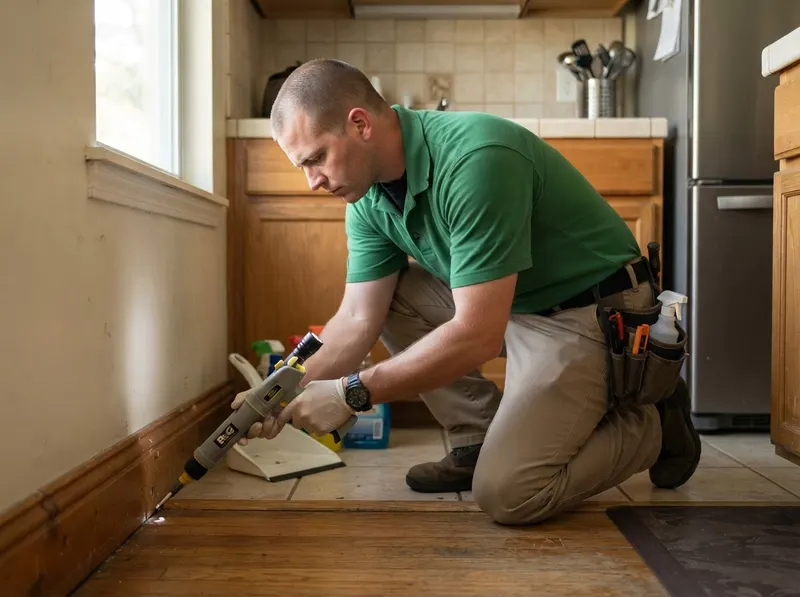
A highly scientific, bait-centric indoor eradication service tailored to the distinct physiological behaviors of sweet-feeding ghost ants (Tapinoma melanocephalum), rover ants, and invasive German cockroaches (Blattella germanica). Recognizing that broadcast pesticide spraying causes budding, a process where polygyne ant colonies panic and split into multiple autonomous sub-colonies throughout the home, this protocol relies exclusively on slow-acting, micro-targeted matrix baits. Formulated with targeted insect growth regulators (IGRs) and metabolic disruptors, microscopic bait beads are positioned directly within cabinet hinges, switch-plate wall voids, under-counter utility penetrations, and appliance compressor compartments. Foraging worker ants ingest the carbohydrate and lipid carrier agents and carry them deep into hidden nesting cavities, feeding brood and queens through horizontal trophallaxis to systematically eliminate the biological root of the infestation.
Get a quote →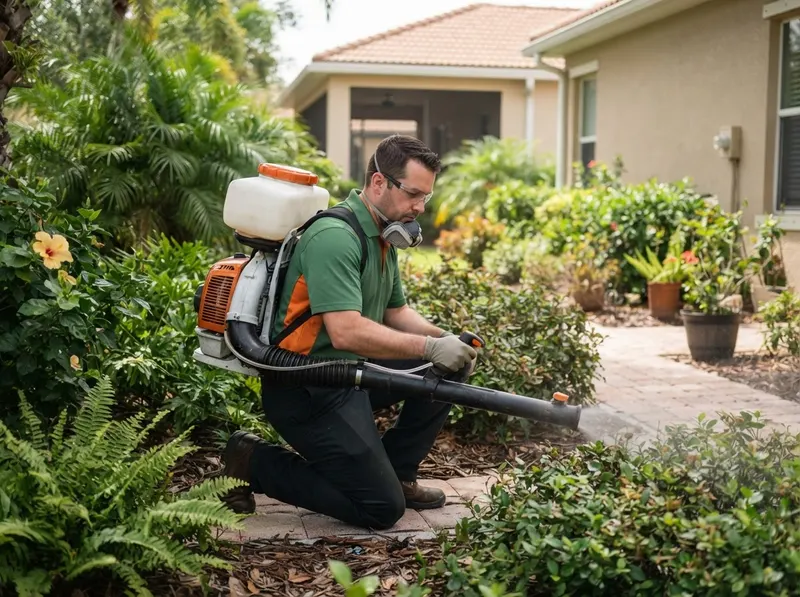
A targeted seasonal reduction strategy engineered to disrupt mosquito breeding and resting vectors across private residential parcels without harming beneficial pollinators like honeybees and butterflies. Technicians utilize commercial-grade, ultra-low-volume (ULV) mist blowers to apply an all-natural, botanical-based barrier to the undersides of dense ornamental broadleaf foliage, shaded undersides of structural eaves, vertical privacy fencing, and sheltered shrubbery where adult female mosquitoes harbor during peak daylight hours. Concurrently, all standing outdoor water features, landscape drainage swales, ornamental ponds, and gutter downspout catch basins are treated with biological Bacillus thuringiensis israelensis (BTI) briquettes and microbial larvicides. These specialized biological control agents selectively destroy mosquito larvae in the pupal stage within 24 hours of ingestion while remaining entirely harmless to birds, ornamental fish, amphibians, and mammals.
Get a quote →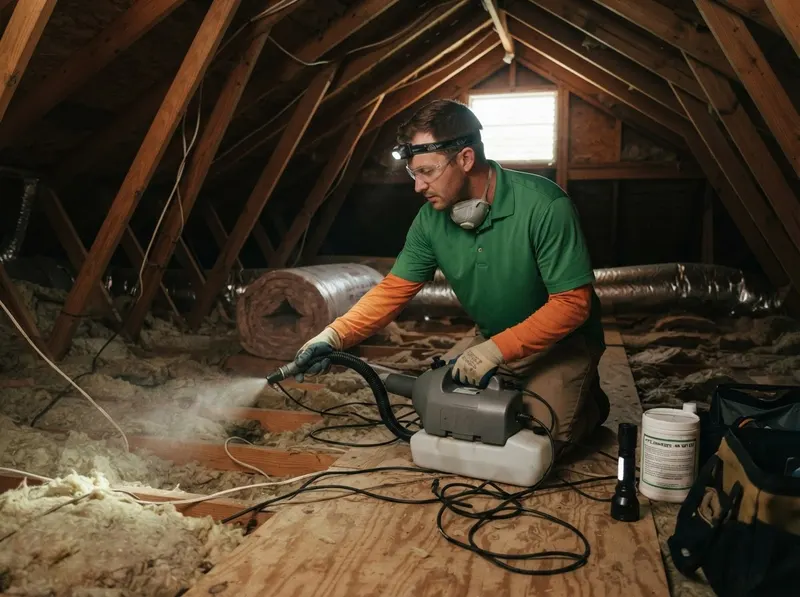
A restorative environmental service performed after significant rodent, bat, or pest infestations within structural attic planes and crawlspaces. When left unchecked, pest incursions leave behind hazardous bio-loads of fecal pellets, pheromone trails, urine-saturated thermal insulation, and ectoparasites like mites and fleas. Technicians execute complete containment, carefully extracting contaminated fiberglass or cellulose insulation using specialized high-powered HEPA-filtered vacuum disposal systems that route all particulate waste directly to external sealed collection bags. Once the attic deck is cleared, the exposed framing timbers and drywall backing undergo multi-stage antimicrobial fogging with broad-spectrum enzyme agents to neutralize zoonotic bacteria, hazardous viral proteins, and territorial scent markers. The process concludes with the blown-in installation of virgin pest-resistant borate-infused cellulose insulation to restore peak home energy efficiency and thermal ratings.
Get a quote →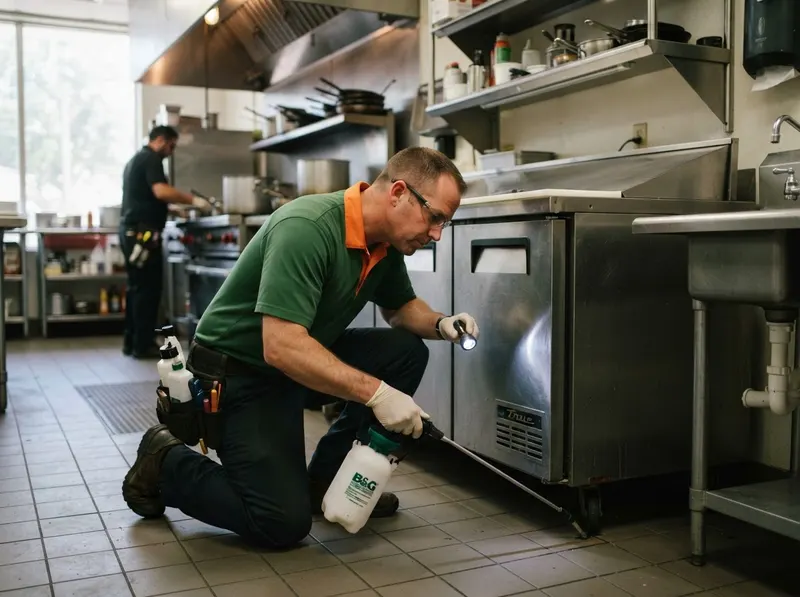
An auditable, documentation-heavy regulatory pest management program constructed for commercial food handling establishments, restaurants, cafes, and hospitality venues operating under stringent Pinellas County Health Department oversight. This program centers on non-toxic, non-contaminating sanitation protocols to eradicate structural fruit flies (Drosophila melanogaster), drain flies, storage beetles, and nocturnal German roach colonies. Technicians deploy thick biological enzyme foams deep into commercial floor drains, grease trap sumps, and wet tile grouting to digest the organic fat and biofilm layers necessary for fly larval survival. Electronic insect light traps, tamper-resistant low-profile pheromone monitors, and strategic non-repellent structural bait placements are placed throughout walk-in coolers, dry storage racking, dish pits, and prep line stainless steel bases to guarantee absolute food-safe compliance.
Get a quote →You get a firm, itemized quote for your pest control service before any work begins, no surprises, no pressure.
Careful prep, tidy work, and a full cleanup when we are done. We treat your home and belongings like our own.
The same trusted, background-checked team from the first call to the final check.
Selecting an effective pest management strategy requires evaluating the specific biological profile of the pest, the building architecture, and the environmental conditions of the lot. If a property experiences intermittent sightings of peri-domestic pests such as American cockroaches, smoky brown roaches, or foraging ghost ants entering from adjacent landscaping, an exterior perimeter barrier service is the appropriate initial choice. If wood members exhibit structural hollows, discarded alate swarmer wings, frass deposits, or earthen shelter tubes along slab edges, an intensive subterranean termiticide trenching or localized drywood void injection program is required.
If nighttime scratching, gnaw marks on electrical wiring, or disturbed ceiling insulation indicate vertebrate nesting, an integrated rodent exclusion, trapping, and mechanical sealing protocol is necessary. The decision-fit trade-off between exterior perimeter chemical suppression and full-scale structural exclusion lies in the scope of physical intervention versus immediate containment speed. Exterior liquid barrier applications provide rapid surface suppression along foundation thresholds with zero cosmetic alteration to the building, but they cannot stop arboreal roof rats or aerial drywood termite swarmers from entering upper roof junctions.
Conversely, comprehensive structural exclusion demands meticulous mechanical labor to seal every roof-to-fascia junction, crawlspace grate, and plumbing penetration, representing a higher upfront capital investment that permanently eliminates physical harborage routes without continuous chemical reapplication. For properties constructed with raised pier-and-beam foundations over damp native dirt, pairing subterranean soil drenching with crawlspace moisture-vapor containment delivers the only sustainable defense against structural timber degradation.
Every project gets a firm, written price after a free on-site visit. Ranges below for orientation.
Tell us about your pest control service job and we'll send a clear, written quote, usually the same day. Or just call and talk to a real St. Petersburg pro.
(727) 662-3821
St. Petersburg occupies the southern tip of the low-lying Pinellas County peninsula, bordered by Tampa Bay to the east and the open waters of the Gulf of Mexico to the west. This geographic position subjects local structures to extreme, continuous environmental stressors, including average annual relative humidity levels of over 74 percent, frequent tropical afternoon precipitation events, and shallow, shifting groundwater tables. Historic neighborhoods like Kenwood, Historic Uptown, and Old Northeast feature high concentrations of 1920s Craftsman bungalows, wood-frame vernacular architecture, and heart pine framing elevated over damp crawlspaces on shallow brick piers. These structural configurations provide direct, ground-level access for subterranean termite foraging tubes and create ideal microclimates for moisture-loving wood-decay fungi, ghost ants, and powderpost beetles. In contrast, waterfront neighborhoods such as Shore Acres, Snell Isle, Coquina Key, and Riviera Bay consist predominantly of mid-century and modern concrete slab-on-grade construction. Here, recurrent high-tide king tides and coastal street flooding saturate soil beds, forcing displaced American cockroaches (palmetto bugs) and subterranean insects upward through structural plumbing chasms, slab expansion joints, and concrete block wall voids. Furthermore, residences bordering protected natural habitats such as Boyd Hill Nature Preserve, Weedon Island Preserve, Sunken Gardens, and the extensive mangrove canals of Bayway Isles experience intense seasonal insect migrations. When the hot wet season between June and October brings saturated soil conditions, exterior garden-bed pest populations rapidly shift toward residential elevations, requiring specialized barrier formulations that will not wash out into municipal stormwater systems, Boca Ciega Bay, or Tampa Bay.
Free estimates for St. Petersburg & the surrounding area.
 Pelican Grove Pest Control